
IKIGAI Journal
How to Start Yoga in Hong Kong
A practical, pressure-free guide for anyone who has never practised before.
Starting yoga in Hong Kong is simpler than most beginners think. You do not need to be flexible, buy expensive clothes, or understand yoga philosophy before you arrive.
You need one class, one hour, and a willingness to be a beginner in a room with other people who are learning too.
This guide covers what to expect, what to wear, which class to choose first, how often to practise, and how to find a studio that fits naturally into your life in the city.
What Kind of Yoga Should a Beginner Try First?
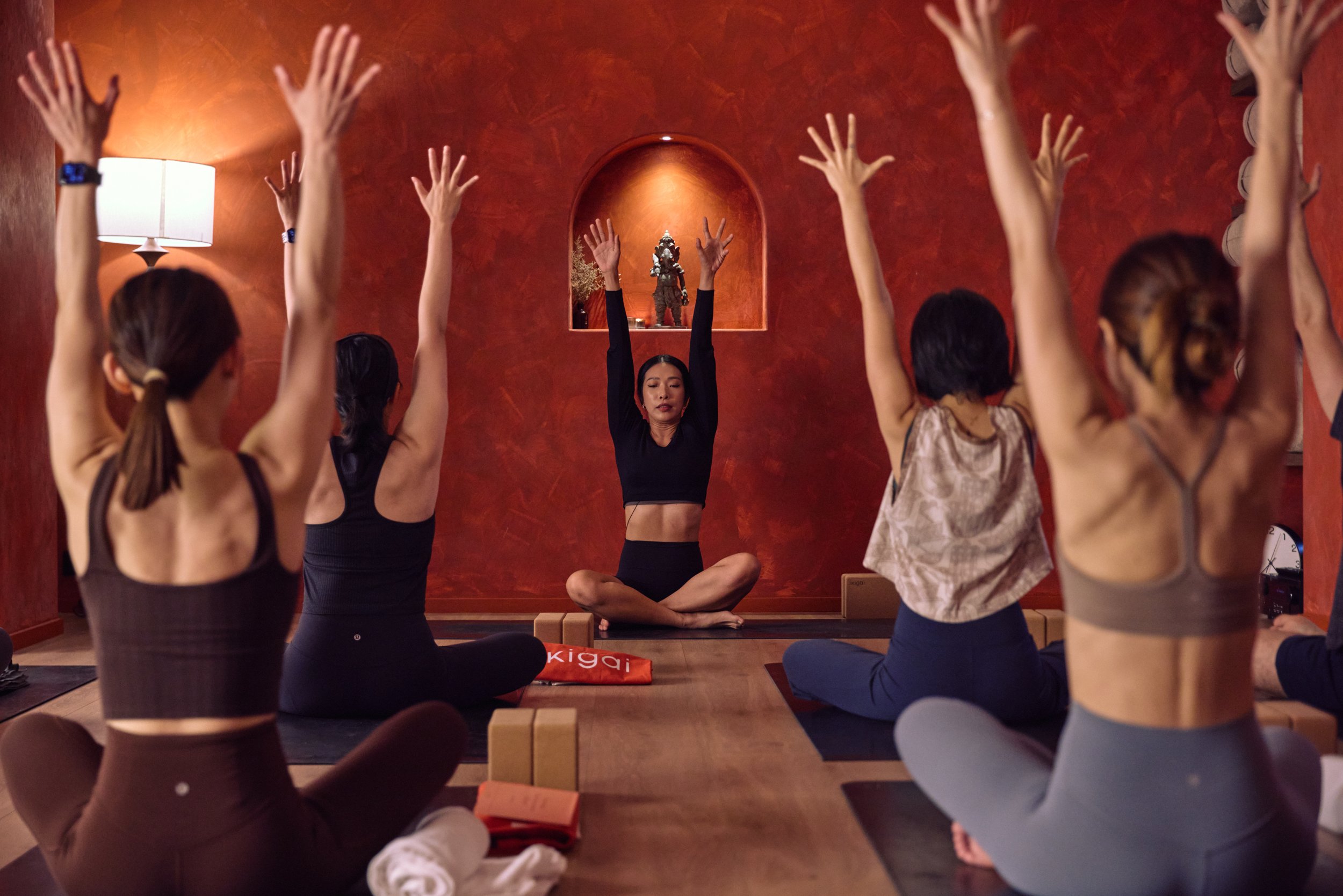
If you have never practised yoga, begin with a slower, clearly guided class such as Hatha Yoga, Gentle Flow, Align, or another Level 1 class.
These classes usually hold each posture long enough for the teacher to explain where to place your body, how to use your breath, and what sensations you may notice. They do not assume that you already know the posture names or understand how a yoga class is structured.
Vinyasa, sometimes called Flow, links movement and breath in a more continuous sequence. It can feel athletic, energising, and rewarding once you understand the foundations, but the quicker pace may feel stressful in a very first class.
Heated yoga also adds another layer of intensity. If you are completely new, it is generally better to learn the basic movements and understand your limits in a non-heated or gently warmed class before trying a stronger hot practice.
Start Slow
Choose Hatha, Gentle Flow, Align, Relax, or another Level 1 class.
Learn Clearly
Give yourself time to understand the postures, props, and breathing.
Build Gradually
Explore faster Flow or heated classes once the basics feel familiar.
At IKIGAI, classes are organised by level and practice intention, so beginners can choose a room that is designed to support where they are starting.
What Should You Wear to Your First Yoga Class?
Wear anything that allows you to move comfortably. A fitted T-shirt or tank top, leggings, or shorts that stay in place when you bend forward are all suitable.
Yoga is practised barefoot, so you will leave your shoes outside the practice room. You do not need branded yoga clothing or a new outfit. Comfortable gym clothes you already own are completely fine.
Hong Kong yoga studios are usually air-conditioned throughout the year. Bring a light layer if you tend to feel cold, particularly for savasana, the resting posture at the end of class.
Comfortable enough to move.
Simple enough to forget about.
Nothing more is required.
What Do You Need to Bring?
Almost nothing. Many Hong Kong studios provide mats and common props such as blocks, straps, bolsters, and blankets. Check the studio’s first-visit information before arriving so you know exactly what is included.
Bring a water bottle and a small towel if you tend to sweat. It is also useful to arrive with enough time to check in, change, and speak to the teacher before class.
At IKIGAI, mats and props are available. Our team recommends arriving 10 to 15 minutes early so we can show you the space and help you settle in.
Comfortable clothes you can move in
A water bottle
A small towel, if useful
Ten to fifteen minutes of extra arrival time
How Often Should a Beginner Go to Class?
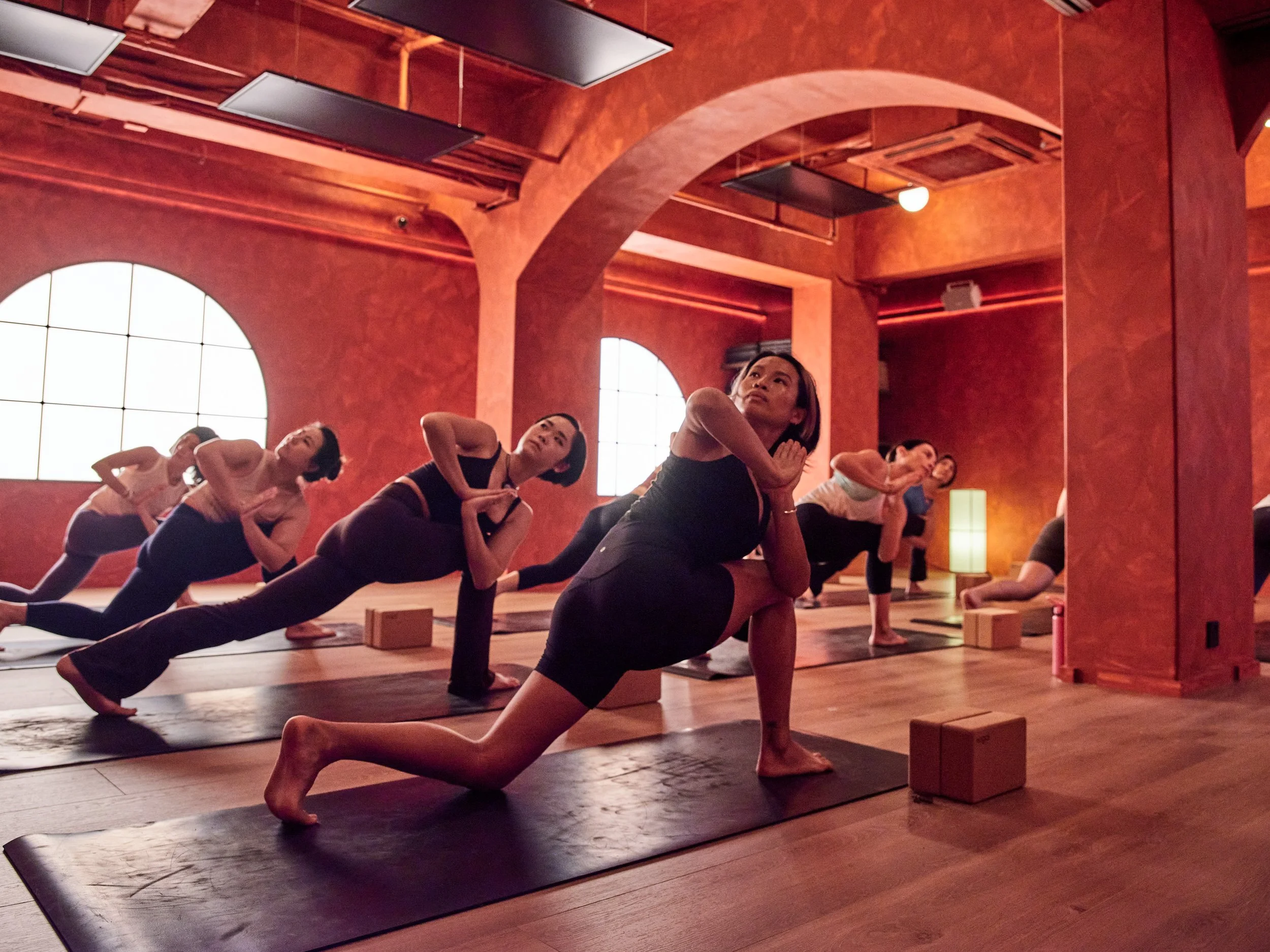
Twice a week is a realistic starting rhythm for the first month. It gives your body time to recover while keeping the movements and instructions familiar.
Once a week can still be helpful, but it may take longer to build confidence. Three classes a week is often where beginners begin to notice more meaningful changes in mobility, sleep, body awareness, and stress.
The important part is not doing as much as possible. It is returning often enough that every class does not feel like your first.
A gentle introduction, but progress may feel slower.
A balanced and sustainable rhythm for most beginners.
More repetition, confidence, and noticeable momentum.
Avoid putting pressure on yourself to practise every day immediately. Begin with a short trial period or starter program, notice how your body responds, and build from there.
Group Class or Private Lesson?
Both can work well, but they serve different needs.
Group Classes
Best for building rhythm and community.
- More accessible per class
- Many styles and times to explore
- A regular routine helps the habit stick
- Shared energy without individual pressure
Private Lessons
Best for individual guidance and specific needs.
- Personalised alignment and modifications
- Useful when working around an injury
- Support for body-image or confidence concerns
- Flexible scheduling for a busy week
Most beginners in Hong Kong start with group classes and consider one or two private lessons later if they want more individual feedback.
Where Should You Practise Yoga in Hong Kong?
Hong Kong has a strong yoga community, with studios throughout its main commercial and residential districts.
For most beginners, convenience matters more than chasing the “perfect” studio. The studio close enough to fit into your real week is the one you are most likely to attend consistently.
“The best studio is not the one you plan to visit. It is the one you can realistically return to.”
IKIGAI has three locations designed around this reality:
Central
7/F, On Lan Centre
11–15 On Lan Street
Causeway Bay
21–23/F, Art Piece Building
3 Matheson Street
Tsim Sha Tsui
1/F, Art Piece Building
53 Carnarvon Road
Classes are taught in English, Cantonese, or bilingually depending on the instructor. Check the class listing before booking for the language, level, and format.
What Should You Expect in Your First Class?
Arrive 10 to 15 minutes early. Complete the check-in process and tell the teacher about any injuries, pain, medical concerns, or pregnancy before the class begins.
Leave your shoes outside the practice room and place your belongings where the studio team directs you. Set up toward the back if that helps you feel less self-conscious, or closer to the teacher if seeing demonstrations clearly will make you feel more secure.
A typical class may begin with breathing or a short seated pause, move into a physical warm-up, build through a sequence of postures, and finish with savasana, a few minutes of stillness while lying down.
Arrive and Settle
Check in, meet the team, and let your teacher know that it is your first class.
Warm Up
Begin with breathing, mobility, or simple postures to prepare the body.
Explore the Practice
Follow the teacher, use props, pause when needed, and choose modifications.
Rest
Finish with savasana and allow the effects of the practice to settle.
If you cannot do a posture, the teacher will usually offer a variation or modification. Taking the modification is not failure. It is the practice of listening and responding intelligently.
What If You Feel Like the Wrong Shape or the Wrong Level?
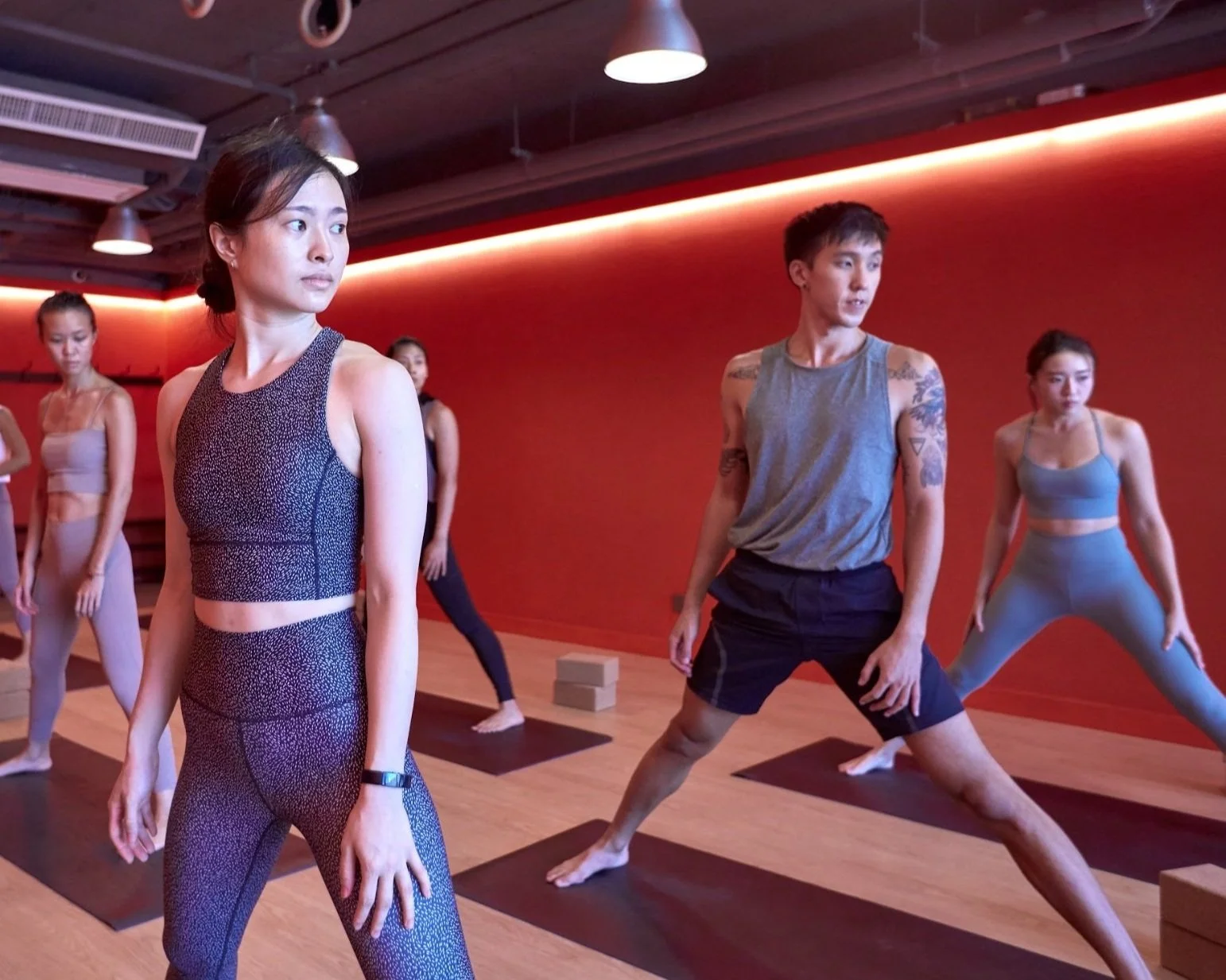
Almost every beginner carries at least one worry into their first class. Most of those worries become much smaller once the class begins.
“I am not flexible enough.”
Flexibility is one possible result of practising yoga. It is not an entry requirement. Everyone begins with a different body, history, and range of movement.
“I might be the only man in the room.”
Yoga classes may still have more women than men, but mixed classes are increasingly common in Hong Kong. Most students are focused on their own breathing and movement, not on watching anyone else.
“I do not know the posture names.”
You are not expected to know Sanskrit or remember a sequence. The teacher will name, explain, and demonstrate the postures as the class progresses.
“My body does not look like a yoga body.”
There is no single yoga body. A sustainable practice is built by adapting movement to the person, not by forcing every person into the same shape.
No perfect shape.
No perfect level.
Just a place to begin.
What Is the Next Step?
Choose a beginner-friendly class at the studio closest to you and book it. That is the whole strategy.
IKIGAI’s 14-Day Starter Program is designed for people who are new to yoga, or who have tried before but never felt properly guided. It gives you 14 consecutive days of group class access across Central, Causeway Bay, and Tsim Sha Tsui, with a clear structure to help you move from orientation to confidence.
It is enough time to try different teachers, understand the main class formats, and discover whether yoga fits your body, schedule, and life before choosing a longer membership.
Your First 14 Days of Yoga
Begin properly, without a long-term commitment.
Start the 14-Day ProgramOne payment. No subscription. No long-term commitment.
You do not need to feel ready before your first class. Readiness grows by arriving, practising, resting, and returning.
Think clearly. Move freely. Live joyfully.
Frequently Asked Questions
Can I start yoga if I am not flexible?
Yes. You do not need to be flexible before beginning. Yoga can gradually support mobility, strength, balance, and body awareness. Props and modifications help make postures suitable for different bodies.
Which IKIGAI class should I choose first?
Choose a Level 1 class or begin with a slower format such as Align, Relax, Hatha, Gentle Flow, or a dedicated beginner class. Check the schedule description and contact the team if you would like help choosing.
Do I need to bring a yoga mat?
No. Mats and common props are available at IKIGAI. Bring comfortable clothing, water, and arrive 10 to 15 minutes before your class.
How many yoga classes should a beginner take each week?
Two classes per week is a balanced starting point for many beginners. Three classes can create faster familiarity, while one class per week is still useful if that is what fits your schedule consistently.
Should my first yoga class be hot yoga?
A non-heated or gently warmed beginner class is usually an easier place to learn the foundations. Once you understand the basic postures and how your body responds, you can explore stronger heated practices if they appeal to you.
Which IKIGAI studio is best for beginners?
All three IKIGAI studios welcome beginners. Choose the location that is easiest to reach from home or work, then select a suitable Level 1 class. Consistency matters more than choosing one particular studio.
What is included in the 14-Day Starter Program?
The program includes 14 consecutive days of group class access across IKIGAI Central, Causeway Bay, and Tsim Sha Tsui. It is designed to help new students explore different classes and build confidence before choosing a longer-term option.