
IKIGAI Journal
Six Things That Block Your Practice
A 15th-century yoga text named six patterns that get in the way of progress. They still feel surprisingly familiar today.
Most people think progress in yoga depends on learning more poses, becoming more flexible, or developing stronger discipline. Those things can help, but the deeper tradition points somewhere more practical.
Sometimes what matters most is not what we add to the practice, but what we stop feeding.
The Hatha Yoga Pradipika, one of the foundational texts of Hatha Yoga, names six obstacles that prevent yoga from developing. They were written centuries ago, but they describe patterns that feel immediately recognisable in modern city life: excess consumption, over-effort, too much noise, rigidity, unsupportive environments, and inconsistency.
This article is not about turning yoga into a strict moral code. It is about looking honestly at the habits that drain our attention, energy, and steadiness.

“The practice is not only about what you do on the mat. It is also about what you stop carrying into it.”
A Short Note on Hatha Yoga
Today, Hatha Yoga is often used on studio schedules to describe a slower, more foundational yoga class. That is not wrong, but it is only part of the picture.
Traditionally, Hatha Yoga is a complete system of practice. It uses the body, breath, discipline, and awareness as preparation for deeper states of steadiness and meditation.
In that context, the body is not treated as something to perform with. It is treated as the starting point for transformation. The practice asks a simple question: what helps us become clearer, steadier, and more available to life?
The six obstacles answer the opposite question: what gets in the way?
The Six Obstacles
In Sanskrit, the verse from the Hatha Yoga Pradipika names six things that “destroy yoga”:
Atyahara, Prayasa, Prajalpa,
Niyamagraha, Janasanga, Laulya.
Roughly translated, these are: overeating or excess consumption, excessive exertion, too much talking, rigid adherence to rules, wrong company, and unsteadiness.
They may sound old-fashioned at first. But translated into modern life, they describe many of the reasons people feel tired, scattered, inconsistent, or disconnected from their own practice.
Excess Consumption · Atyahara
The traditional translation of Atyahara is overeating. The idea is simple: when the body is overloaded, energy becomes heavy and the mind becomes dull.
But this obstacle is not only about food. In modern life, excess consumption can mean too much information, too much scrolling, too many notifications, too much noise, too many opinions, too many things taken in without enough time to digest them.
This is especially relevant in Hong Kong, where the day can feel like a continuous stream of input. Messages, meetings, screens, commutes, deadlines, social plans, late dinners, and background noise all accumulate in the system.
The question is not “How do I consume nothing?” The better question is: what am I taking in that I do not have the space to process?
Modern practice: Notice what leaves you feeling clear, and what leaves you feeling full but not nourished.
Excessive Exertion · Prayasa
This obstacle is easy to misunderstand. Yoga requires effort. Discipline matters. Consistency matters. So why would effort become a problem?
Because effort and strain are not the same thing.
Prayasa points to the kind of over-effort that depletes rather than strengthens. It is the tendency to keep pushing even when the body is already exhausted, to turn every practice into a test, or to treat rest as something that has to be earned.
Many people bring this pattern directly onto the mat. After a week of overwork, they arrive in class and try to force the body into progress. But the nervous system does not always learn through pressure. Often, it learns through repeated experiences of safe, steady challenge.
The practice is not to do less for the sake of doing less. It is to recognise the difference between effort that builds capacity and effort that burns through your reserves.
Modern practice: Ask yourself, “Is this effort making me more available, or more depleted?”
Too Much Talking · Prajalpa
Prajalpa means excessive or unnecessary talk. It is not a criticism of conversation, community, or expression. It points to speech that scatters energy.
We know this feeling. A conversation that turns into gossip. A complaint loop that leaves everyone more tense. An argument that creates heat but no clarity. A habit of filling silence because silence feels uncomfortable.
In modern life, this also includes digital speech: comment sections, endless messages, reactive posting, and consuming other people’s opinions until your own mind feels crowded.
The insight is about attention. What we repeatedly speak about, we strengthen. What we repeatedly strengthen, we carry into our body, breath, and mind.
Yoga asks for a mind that can settle. Too much unnecessary noise makes that harder.
Modern practice: Before speaking or reacting, ask whether it adds clarity, care, or usefulness.
Rigidity Around Rules · Niyamagraha
This is one of the most interesting obstacles because it sounds contradictory. Yoga values discipline, so how can rules become a problem?
The issue is not structure. The issue is rigidity.
Rules are useful when they support awareness. They become obstacles when they replace awareness. A practice schedule can help you stay consistent, but if you follow it blindly when your body is unwell, the rule has become more important than the purpose it was meant to serve.
The same happens on the mat. A student may refuse to modify a pose because they think using a block means they are doing it “less properly.” Another may force themselves into a shape because they have decided that is what the pose should look like.
In both cases, the external rule has taken over the internal intelligence of the practice.
Modern practice: Let structure support your awareness, not replace it.
“Discipline should make you more awake, not more mechanical.”
Unsupportive Company · Janasanga
Janasanga is often translated as wrong company. That can sound harsh, but the idea is practical: the people and environments around us shape what feels normal.
If you spend enough time in environments that reward overwork, comparison, gossip, cynicism, or constant stimulation, those patterns become easier to absorb. Even with good intentions, it becomes harder to stay steady.
This does not mean cutting people off or only surrounding yourself with people who think exactly like you. It means becoming honest about what certain environments do to your state of mind.
Some spaces make practice easier. Some make it harder. Some people leave you clearer, softer, and more grounded. Others leave you tense, reactive, or disconnected from what matters.
The tradition asks us to notice this without drama. Your environment is part of your practice.
Modern practice: Pay attention to who and what helps you return to yourself.
Unsteadiness · Laulya
The final obstacle may be the most familiar. Laulya points to restlessness, instability, and inconsistency.
On the body level, it can appear as the inability to stay still, to remain in a posture, or to breathe steadily when something becomes uncomfortable.
On the mind level, it appears as constant switching. Starting a practice and abandoning it. Moving from one teacher to another, one method to another, one routine to another, always searching for the next thing before the current thing has had time to work.
On the lifestyle level, it appears as irregular sleep, inconsistent routines, unpredictable energy, and the feeling of always beginning again.
The antidote is not perfection. It is steadiness. Returning again and again, even in small ways, even when motivation is not dramatic, even when life is busy.
Modern practice: Choose a rhythm you can repeat, not one you can only sustain when life is ideal.
Why These Obstacles Still Matter
The six obstacles are not only relevant to advanced practitioners or people living in retreat. They describe the ordinary habits that make steadiness difficult.
Too much input makes the mind crowded. Too much effort makes the body guarded. Too much noise makes attention scattered. Too much rigidity makes the practice dry. Unsupportive environments pull us away from our intention. Inconsistency prevents the practice from taking root.
Seen this way, yoga becomes much more than a physical class. The poses are still important, but they are not the whole practice. They are the doorway.
The deeper work is learning how to arrange your body, breath, attention, and life in a way that supports clarity.
Less excess.
Less force.
Less noise.
More steadiness.
What This Means on the Mat
In a Hatha or foundational yoga class, these teachings become very practical.
You notice if you are forcing. You notice if you are distracted. You notice if your body is asking for a prop but your ego refuses. You notice if you cannot stay with the breath. You notice if your mind is already reaching for the next thing before the current posture is complete.
This is why a slower practice can be so revealing. It gives your patterns enough space to appear.
The point is not to judge them. The point is to see them clearly enough that they no longer run the entire practice.
“The practice begins when we can see our own patterns without immediately obeying them.”
Hatha Yoga at IKIGAI
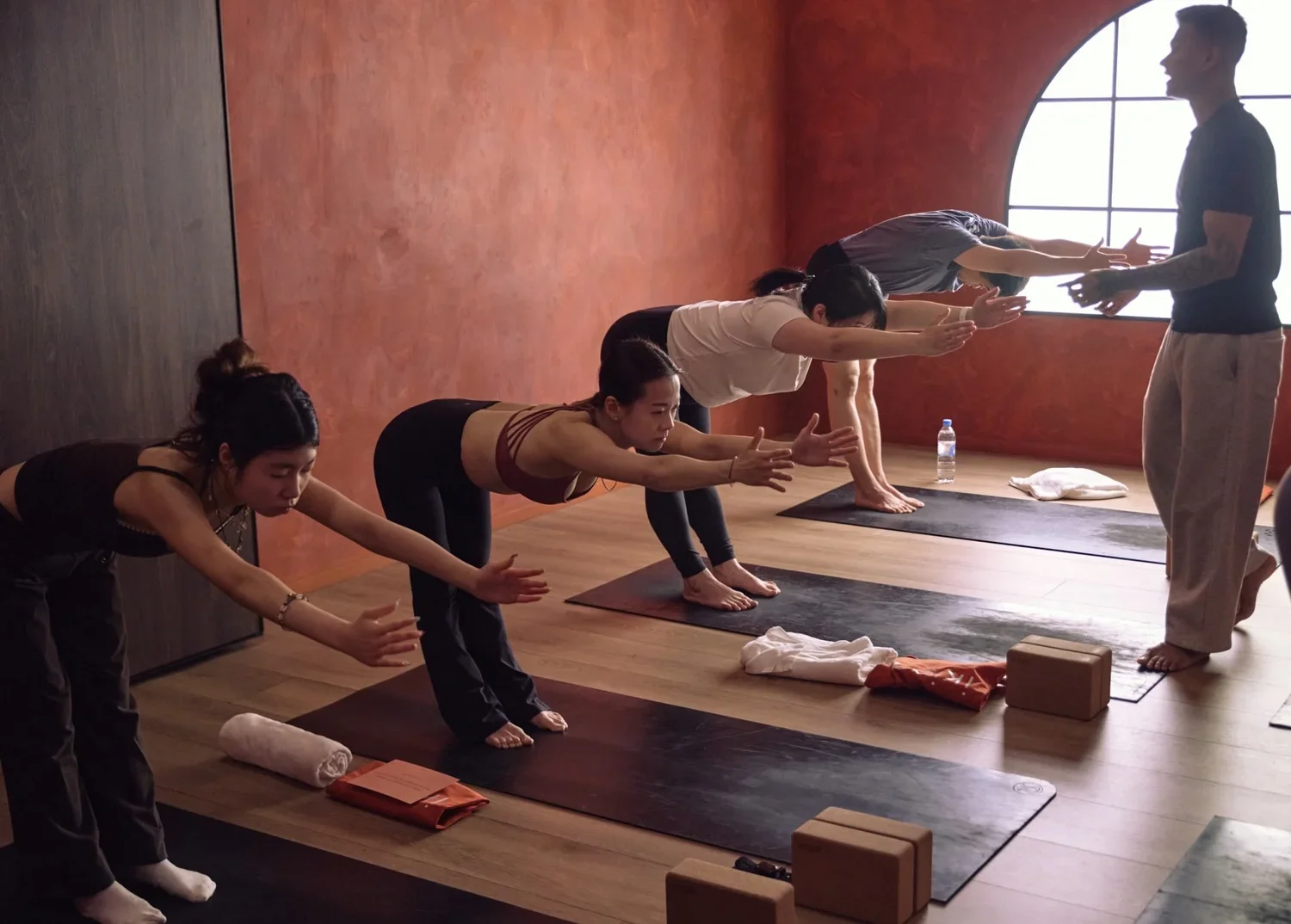
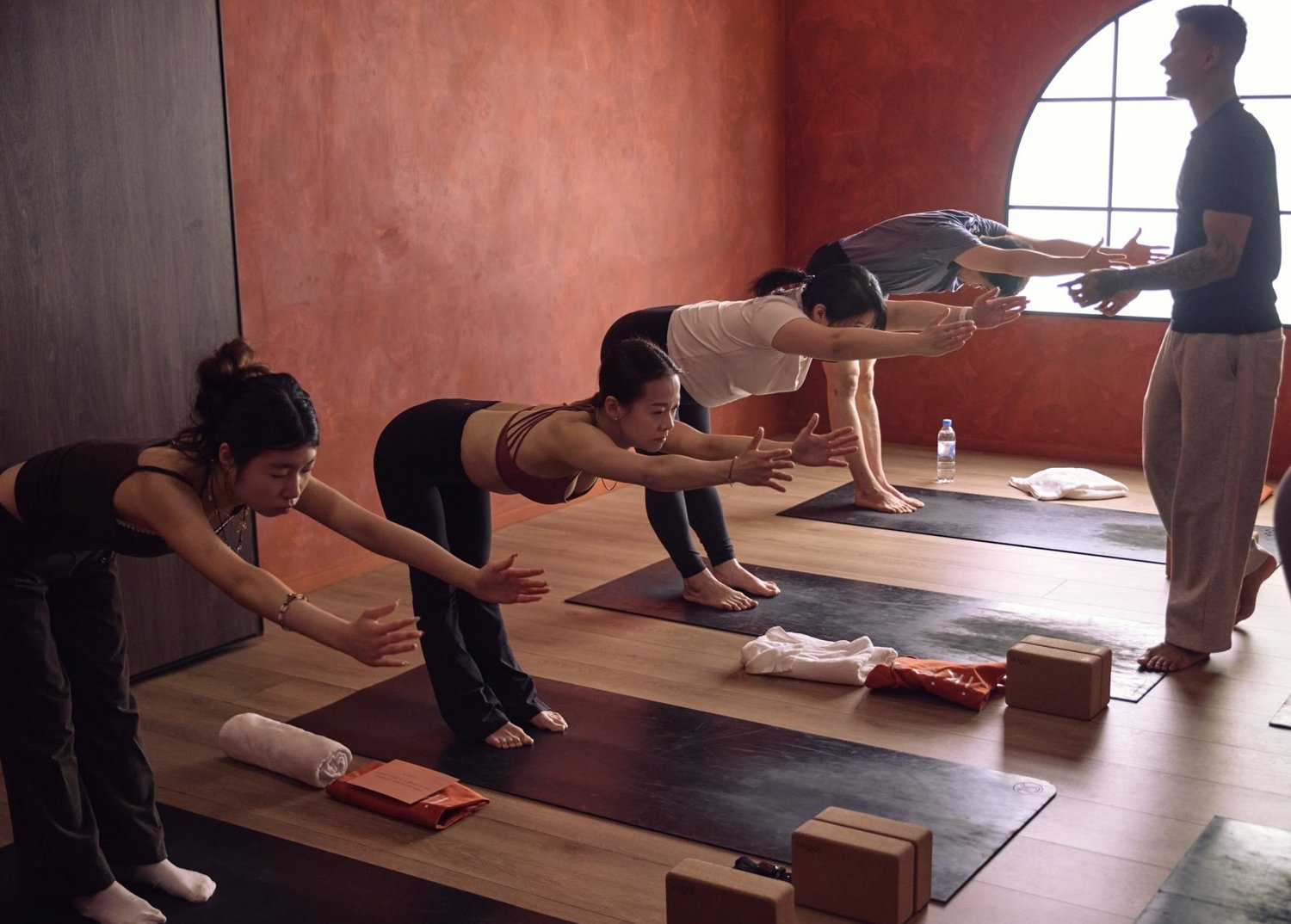
At IKIGAI, Hatha and foundational classes are taught as more than slow movement. They are a way to build strength, mobility, breath awareness, and steadiness with care.
The pace gives you time to listen. The absence of mirrors helps bring attention inward. The use of props and variations allows the practice to meet your body instead of forcing your body to meet an idea.
This is especially important in a city where many people are already living close to capacity. A good practice should not simply add more pressure. It should help you build a clearer relationship with effort, recovery, discipline, and attention.
The six obstacles remind us that yoga is not only something we do. It is also something we protect by choosing what we give our energy to.